
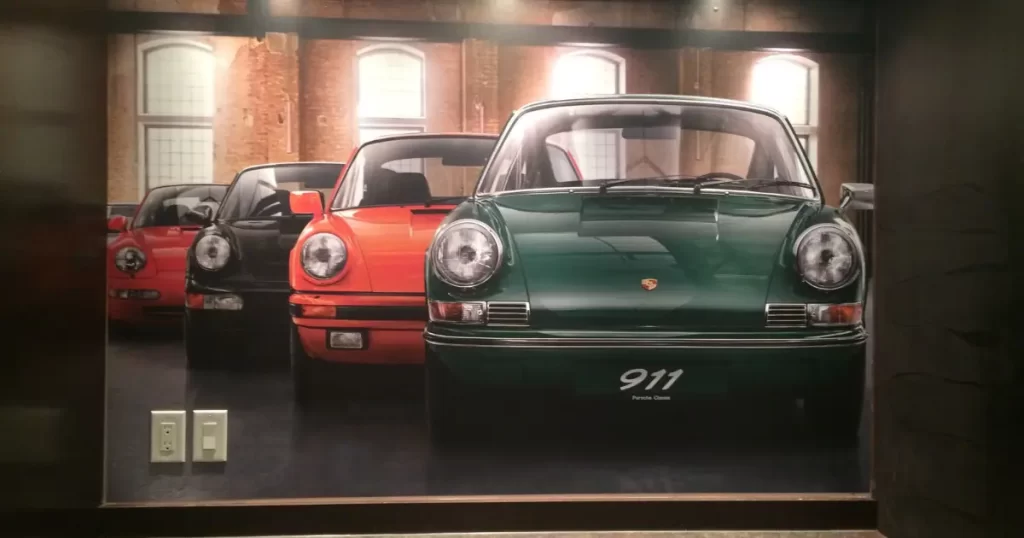
Walk through Winnipeg, and it is hard to miss the city’s relationship with visual storytelling. From the West End to downtown, murals have become a recognizable part of the urban landscape. Tourism Winnipeg has documented more than 600 murals across the city, many reflecting neighbourhood histories, cultures, people, and local stories. Rather than presenting that figure as a current count, it is more accurate to view it as evidence of how established mural culture has become in Winnipeg.
That culture points to a broader idea: a wall is not simply a surface. It can establish a mood, communicate identity, tell a story, and influence how people remember a place. The same principle applies inside a business. A reception area, corridor, meeting room, storefront or conference room may serve an obvious practical purpose, but each also contributes to the experience customers, employees and visitors have with an organization.
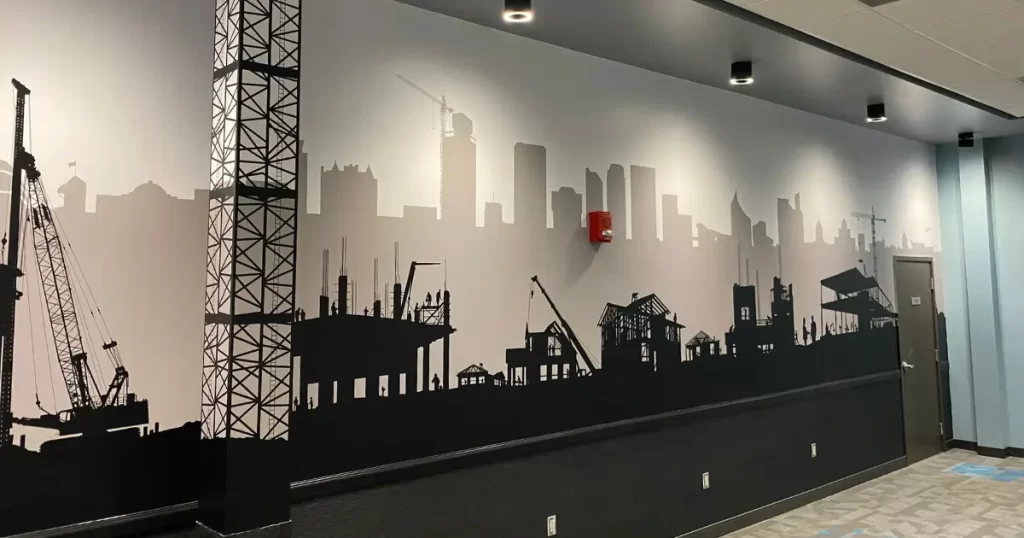
Winnipeg Understands the Power of Visual Storytelling
Winnipeg’s approach to public art goes beyond making spaces more attractive. The City’s planning work recognizes public art as a way to strengthen a sense of place, support local identity, enhance public spaces and help people connect with their surroundings. CentrePlan 2050, for example, identifies public art as one element that can contribute to Downtown’s character, support wayfinding and help create a stronger sense of place. The City has continued putting those ideas into practice through projects such as the Graham Avenue placemaking initiative, which incorporates murals, artistic lighting and other visual elements as part of efforts to create a more welcoming downtown environment.
Businesses can apply the same thinking to their own spaces. Not every company needs a large mural, and not every wall needs a graphic. The point is to consider the space deliberately and ask whether its visual environment reflects the organization behind it.
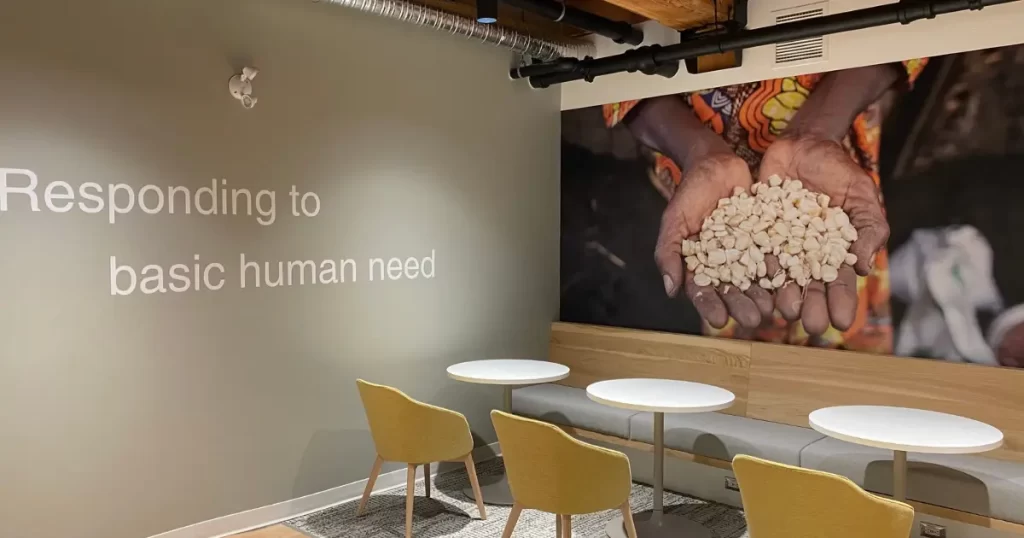
Your Walls Communicate Before You Do
Consider what happens when someone enters your workplace for the first time. Before a conversation begins, the space is already creating an impression. The colours, materials, imagery and layout all influence how the company is perceived.
A well-designed feature wall can introduce a brand without overwhelming the room. A large photographic installation can establish a sense of place. A timeline can communicate a company’s history. A school can use graphics to reflect its students and community, while a professional or healthcare environment can use carefully selected imagery to make an otherwise institutional setting feel warmer and more welcoming.
The important distinction is that these elements should do more than fill empty space. They should contribute to the experience of being there.
The Best Graphics Feel Like They Belong
Effective environmental graphics are not necessarily the loudest or most complicated. They are the ones that feel connected to the business and the people who use the space.
For a Winnipeg organization, that connection might come from its history, neighbourhood, industry or community. An architecture firm could showcase drawings or photography from notable projects. A manufacturer could turn its production process into a large-scale visual story. A restaurant could use custom artwork to communicate the inspiration behind its menu. A community organization could recognize important people, milestones or local stories through a carefully designed wall installation.
This approach fits naturally within Winnipeg’s broader culture of place-based visual storytelling. The Winnipeg Arts Council’s public-art program, for example, emphasizes how artwork can celebrate Winnipeg’s character and contribute to the experience of public spaces.
The goal is not to make a space look decorated for the sake of decoration. It is to make the space feel specific, purposeful and connected to the organization behind it.
Branding Does Not Have to Mean a Logo on Every Wall
One of the easiest ways to make a branded interior feel generic is to treat every surface like an advertisement. A logo, tagline, and contact information may have a place, particularly in reception or promotional areas, but branding can be much more subtle.
A company’s identity can be expressed through colour, typography, imagery, patterns and storytelling. A feature wall might use a carefully composed graphic rather than a giant logo. A pattern derived from the brand’s visual identity can add interest without overpowering the room. A timeline or photographic installation can communicate the company’s history while still feeling like part of the architecture.
The result is a space that reinforces the brand without making visitors feel as though they have stepped inside a brochure.
Glass Can Become Part of the Design
Walls are not the only overlooked surfaces. Interior glass can also become part of a space’s visual identity while maintaining the openness that makes glass useful in the first place.
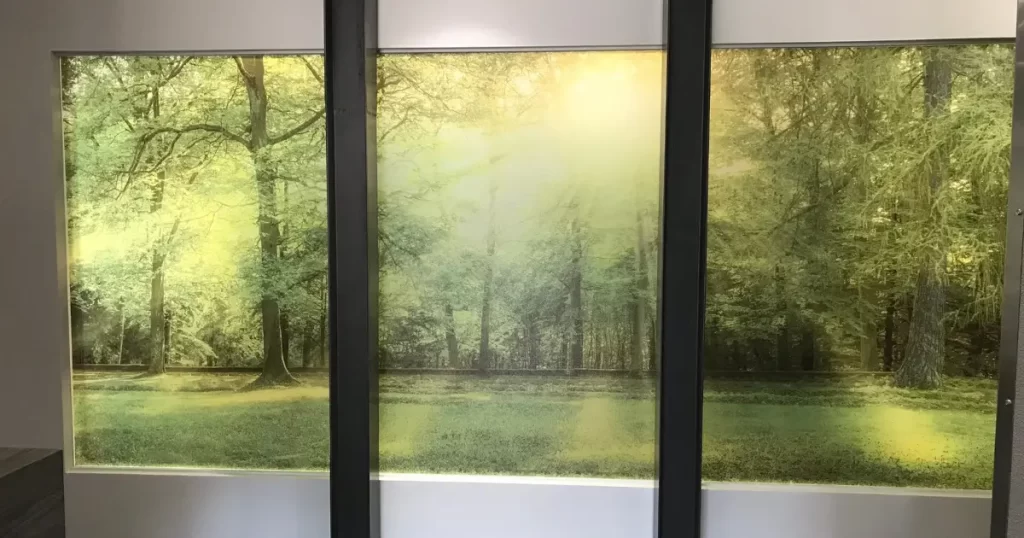
Decorative film can be used to create frosted effects, gradients, patterns, privacy bands, branded elements and custom graphics. A meeting room can gain privacy without feeling completely enclosed. A reception area can use decorative glazing as part of its overall identity. Glass graphics can also reinforce a company’s brand in a way that complements surrounding wall graphics instead of competing with them.
When wall graphics and glass treatments are considered together, the result can feel much more cohesive. Colours, patterns and visual elements can carry naturally from one surface to another, making the interior feel intentionally designed rather than assembled piece by piece.
Good Design Can Also Make a Space Easier to Navigate
Environmental graphics are not only about appearance. They can also serve a practical purpose.
Large offices, schools, healthcare facilities, retail locations and other commercial buildings can be confusing, particularly for people visiting for the first time. Directional graphics, colour zones, room identification and visual landmarks can help people understand where they are and where they need to go.
CentrePlan 2050 specifically identifies public art and placemaking elements as tools that can contribute to wayfinding and make spaces easier to understand and experience. The same principle can be applied indoors. When wayfinding is incorporated into the overall design rather than added as an afterthought, it can make a building more intuitive without making it feel cluttered.
A well-designed graphic can therefore be both visually engaging and useful.
Winnipeg’s Mural Culture Offers a Lesson for Business
Winnipeg’s mural culture illustrates a broader point: people connect with spaces that have character. Murals and public-art projects give places a visual identity, create memorable environments and provide opportunities to tell stories. The City has used public art in projects such as the Southwest Transitway to reflect Indigenous, Métis, civic and natural histories within the built environment.
Businesses can apply the same thinking on a different scale. A new office, retail location, school, restaurant or commercial building does not need to imitate a public mural, but it can borrow the principle behind one: use the physical environment to communicate something meaningful.
A blank wall can become a visual statement. A hallway can become a storytelling element. A glass partition can become a privacy feature. A reception area can become an introduction to the brand. A previously overlooked surface can become one of the most recognizable parts of the space.
Start With the Experience, Not the Graphic
The most useful question is not, “What should we put on the wall?” It is, “What should people feel, understand or remember when they enter this space?”
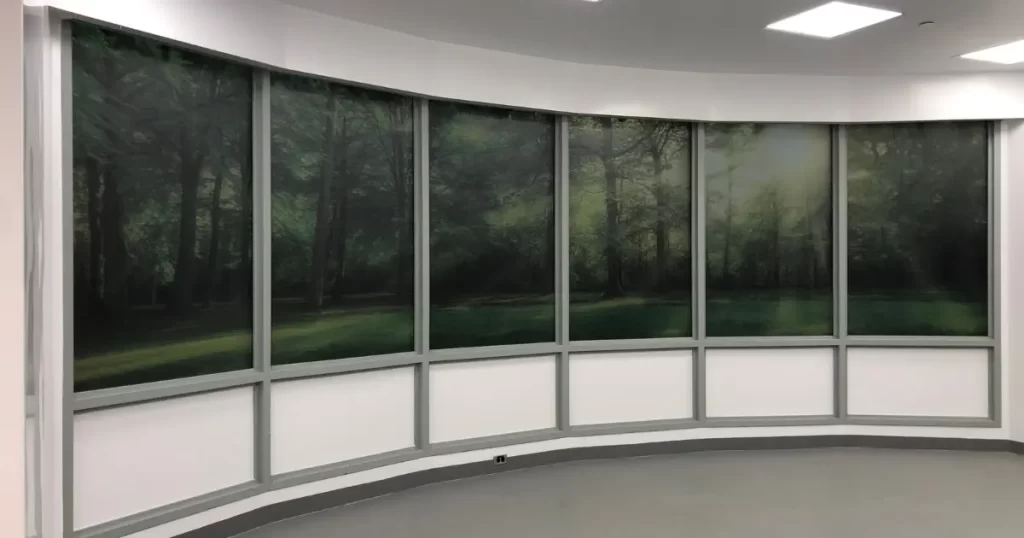
That question changes the design process. If the goal is to make a reception area feel warmer, a large-scale image or branded feature wall may be appropriate. If privacy is the priority, decorative film may offer a better solution. If the goal is to communicate a company’s history, a timeline or custom graphic could make better use of the space. In other environments, the strongest approach may combine wall graphics, decorative glass and wayfinding elements into one visual system.
At Future Tint, decorative film and wall graphics can be developed around the space, the brand and the experience you want to create. From custom feature walls and large-format graphics to decorative and privacy treatments for glass, the goal is not simply to cover a surface. It is to make the environment work harder for the people who use it.
Because the most memorable spaces are rarely memorable by accident. They are designed with a purpose, and that purpose is often visible long before anyone says a word.