
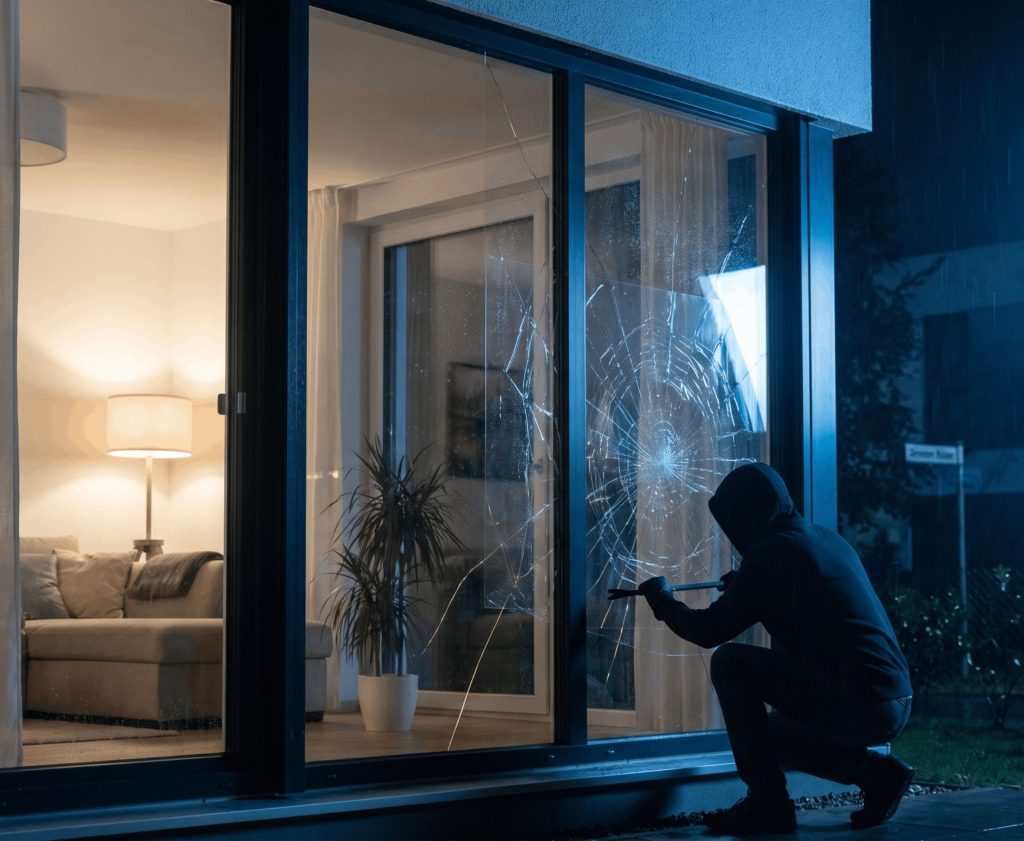
Understanding Vulnerability Patterns in Our Community
When a property appears easy to access, it can become more likely to experience repeated incidents. February’s data points to a clear pattern: properties with unresolved vulnerabilities tend to attract attention more than once. This highlights the value of proactive protection and simple preventive measures.
This is a community notice intended to help residents, property owners, and local businesses stay informed about emerging trends in the area. The goal is not to create concern, but to encourage awareness, preparedness, and practical steps that support safer properties for everyone.
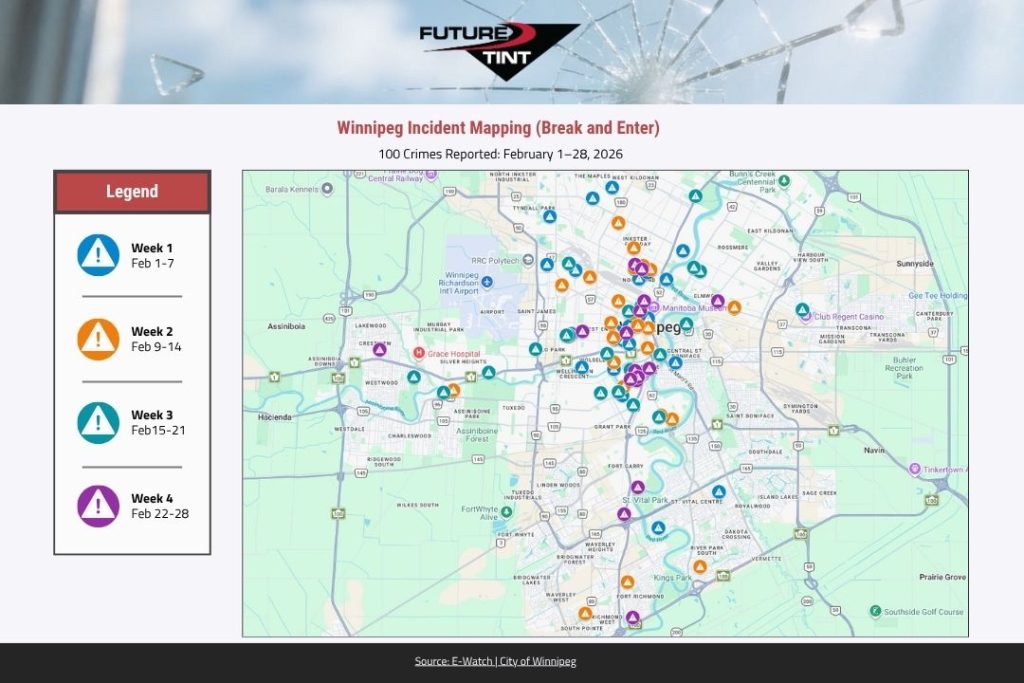
February 2026 Snapshot
Break-and-enter activity remained steady across Winnipeg in February, with 100 reported incidents distributed across all major districts.
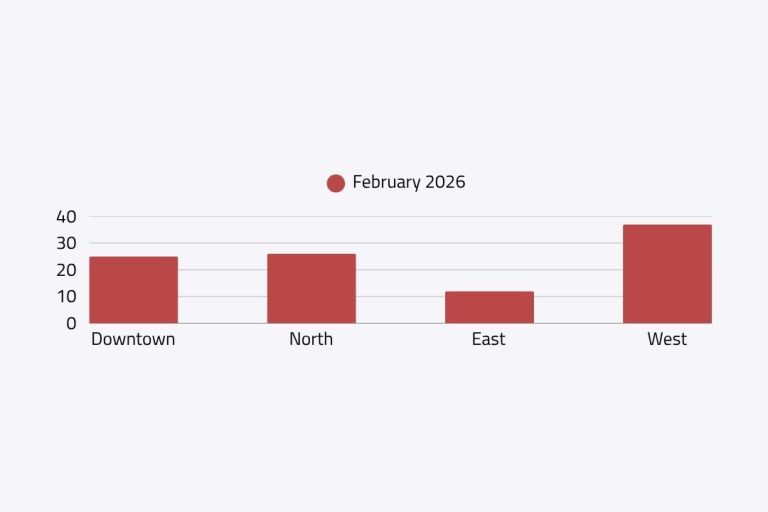
West: 37 incidents
North: 26 incidents
Downtown: 25 incidents
East: 12 incidents
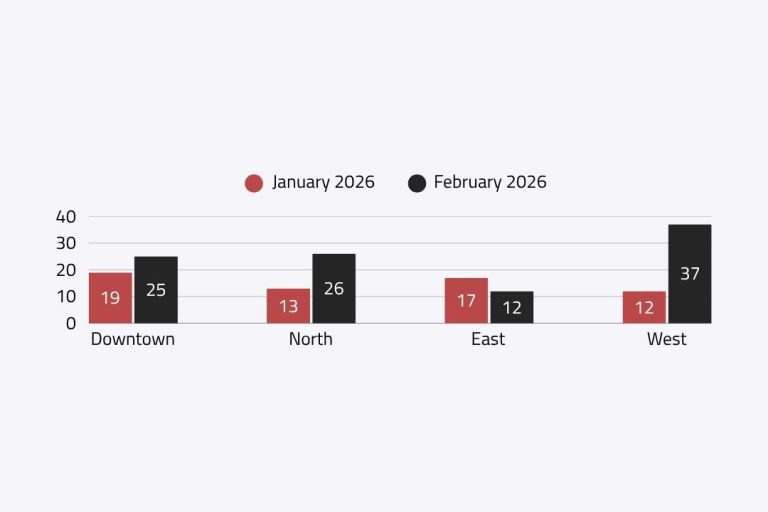
The West district led in total incidents, continuing a shift from January where activity was more evenly distributed. North and Downtown also showed consistent volume, reinforcing that no single area is isolated from risk.
Where Incidents Are Repeating
Beyond total numbers, February highlights a more important pattern: repeat occurrences at the same locations.
The following blocks recorded multiple incidents within the same month:
600 block of Manitoba Ave — 4 incidents
900 block of Spruce St — 3 incidents
100 block of Alcrest Dr — 3 incidents
400 block of Edmonton St — 2 incidents
2000 block of Pembina Hwy — 2 incidents
400 block of Alfred Ave — 2 incidents
500 block of Sherbrook St — 2 incidents
600 block of Talbot Ave — 2 incidents
500 block of Herbert Ave — 2 incidents
900 block of Valour Rd — 2 incidents
These repeat locations suggest that once a property or block is identified as accessible, it may be targeted again. For both residential and commercial properties, this reinforces the importance of addressing vulnerabilities early.
What Stands Out This Month
Compared to January, February shows:
- A higher concentration in the West district
- More repeat incidents at specific addresses
- Continued spread across both residential and commercial areas
Rather than isolated events, the data reflects patterns of opportunity—where ease of access plays a key role in repeat activity.
What Property Owners Can Learn From This
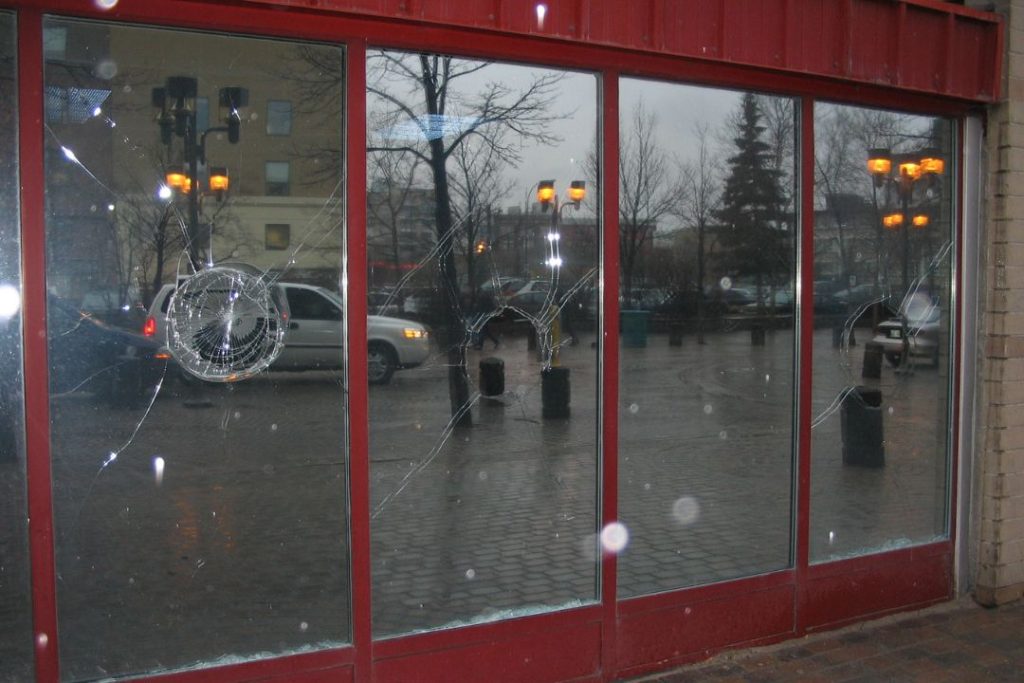
When incidents occur repeatedly, it may indicate consistent access points that require closer attention. In many buildings, glass is among the most exposed areas, making it a practical focus for improving security without major renovations.
Proactive measures—such as regular inspections, upgraded film or reinforcement, and monitoring repeat entry points—can help property owners reduce vulnerability and contribute to a safer environment overall.
A Practical Next Step
At Future Tint, we work with property owners to reinforce glass using safety and security window film—a solution designed to help delay forced entry while maintaining the building’s appearance.
For those looking at February’s data and wondering how their property compares, it may be a good time to assess how exposed your entry points really are.
If you’re ready to take the next step, contact our team today to schedule a consultation and get a professional assessment of your property’s vulnerabilities.